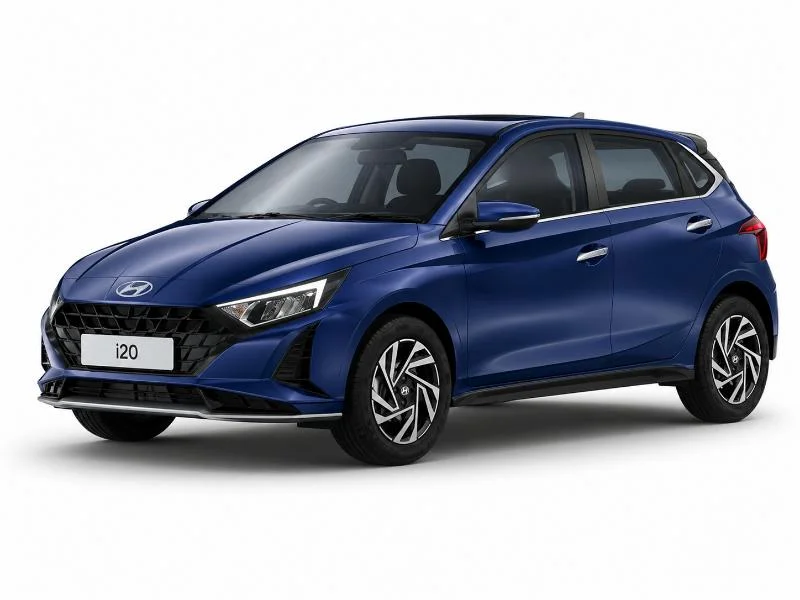
Certified sequential CNG kit installation in Hyundai i20 — 1.2L Kappa MPi and 1.0L Turbo GDi (N Line).
CNG Kit Installation in Hyundai i20
The Hyundai i20 is one of India's most loved premium hatchbacks. It looks sharp, rides well and feels a segment above its price. But its smooth petrol engines — especially the 1.0L Turbo GDi in the i20 N Line — can be thirsty in stop-and-go traffic. For owners who drive 1,000–1,500 km a month, that adds up fast.
Cars Energy is a specialist partner for CNG kit installation in Hyundai i20. We do not use one-size-fits-all kits. Every installation is matched to the exact engine under your bonnet — the port-injected 1.2L Kappa MPi or the direct-injected 1.0L Turbo GDi. All kits we supply are AIS-024/AIS-028 type-approved, and every install ends with laptop-based ECU calibration, not guesswork.
Whether you drive a 1.2 Asta(O) IVT in city traffic or an N Line on weekend highway runs, our CNG kit installation in Hyundai i20 service is engineered to keep the car smooth, safe and fully RTO-endorsed.
Request a Quote for CNG Kit Installation in Hyundai i20 →Hyundai i20 Variants Supported for CNG Kit Installation
The i20 is sold with two petrol engine options. The right CNG kit for your car depends entirely on which one you own. Diesel is no longer offered on the i20 — so every current i20 petrol is eligible for CNG kit installation in Hyundai i20.
Hyundai i20 1.2L Kappa MPi
Hyundai i20 1.0L Turbo GDi
i20 Variant Comparison: CNG Kit Installation in Hyundai i20
| i20 Variant | Engine | Power / Torque | Transmission | CNG Suitability | Real-World Mileage | Install Complexity | Indicative Kit Cost |
|---|---|---|---|---|---|---|---|
| i20 1.2 MPi | 1.2L Kappa MPi (NA) | 88 PS / 115 Nm | 5MT / IVT | ★★★★☆ | 22–30 km/kg | Moderate | ₹40k–₹50k |
| i20 1.0 Turbo GDi | 1.0L Turbo GDi | 120 PS / 172 Nm | 6iMT / 7DCT | ★★★★☆ | 20–28 km/kg | Advanced | ₹48k–₹58k |
| i20 N Line | 1.0L Turbo GDi (tuned) | 120 PS / 172 Nm | 6iMT / 7DCT | ★★★★☆ | 20–27 km/kg | Advanced | ₹50k–₹58k |
Mileage figures are real-world estimates for CNG operation after CNG kit installation in Hyundai i20. Kit costs are indicative and include installation plus basic RTO paperwork assistance.
Table of Contents
- 4. Why Choose CNG Kit Installation in Hyundai i20?
- 5. Understanding the i20 Engines & CNG Compatibility
- 6. CNG Kit Installation in Hyundai i20 1.2L MPi
- 7. CNG Kit Installation in Hyundai i20 1.0L Turbo GDi / N Line
- 8. Boot Space, Cylinder Options & Fitment
- 9. Which i20 Variant Is Best for CNG?
- 10. Sequential vs. Venturi: The Only Choice
- 11. CNG Kit Installation in Hyundai i20 Price & Timeline
- 12. RTO Endorsement & Legal Requirements
- 13. ECU Tuning for i20 Engines
- 14. Maintenance & AMC
- 15. Warranty & Insurance Impact
- 16. CNG vs Petrol Economics for the i20
- 17. Installation Process Step-by-Step
- 18. Locations We Serve
- 19. Frequently Asked Questions
- 20. Why Choose Cars Energy
- 21. Book Your CNG Kit Installation
4. Why Choose CNG Kit Installation in Hyundai i20?
The i20 is a premium hatchback, and its owners usually expect premium running characteristics. That is exactly why a properly calibrated CNG kit installation in Hyundai i20 matters more here than in a budget car. A cheap, poorly tuned kit will make the i20 feel underpowered and rough. A sequential kit with proper ECU mapping keeps the refinement intact while slashing your fuel bill.
Consider the numbers. A 1.2L i20 owner covering 1,200 km a month spends roughly ₹8,500–₹9,500 on petrol. After CNG kit installation in Hyundai i20, the same distance costs about ₹3,400–₹4,000. That is a monthly saving of ₹5,000+, which pays back a ₹45,000 kit in 8–10 months. For ride-hailing or app-cab drivers using the i20, the payback can be under six months.
CNG also burns cleaner than petrol. It produces less carbon buildup in the combustion chamber and keeps engine oil cleaner for longer. The i20's 1.2L Kappa engine is particularly well-suited to gas because it uses port injection, which avoids the valve-deposit issues seen in direct-injection engines. With correct ECU tuning during CNG kit installation in Hyundai i20, the car's factory smoothness and reliability are preserved.
5. Understanding the i20 Engines & CNG Compatibility
The i20 is offered with two very different petrol engines in India. The CNG kit you choose for CNG kit installation in Hyundai i20 must match the engine's injection and aspiration type.
- 1.2L Kappa MPi (Naturally Aspirated): Found in the standard i20. It is a port-injected engine that accepts a standard sequential MPI CNG kit with OBD-II connectivity. This is the easier and cheaper conversion, and it is extremely reliable on gas. It is the same engine family used across the Grand i10 Nios and Aura.
- 1.0L Turbo GDi (Gasoline Direct Injection): Found in the i20 Turbo and the i20 N Line. Direct injection changes the picture. The CNG kit for CNG kit installation in Hyundai i20 Turbo models must include GDi emulation, a high-flow reducer, turbo-capable software and OBD auto-adaptation. Precision calibration is non-negotiable to prevent injector fouling and intake-valve carbon buildup.
6. CNG Kit Installation in Hyundai i20 1.2L MPi
The 1.2L Kappa MPi is the heart of the standard i20 line-up. It is refined, reliable and port-injected — which makes it a very good candidate for CNG kit installation in Hyundai i20. The engine bay is compact but well laid out, and the sequential MPI kit integrates cleanly with the factory ECU.
Recommended Kit for i20 1.2L MPi CNG Kit Installation in Hyundai
A standard AIS-024-approved sequential MPI kit from a reputed brand — Lovato, BRC, Tomasetto or equivalent — is the correct choice for CNG kit installation in Hyundai i20 MPi variants. The kit should include an OBD-II adapter so the CNG ECU can read and respond to the factory engine's fuel-trim signals. This is what separates a refined installation from a rough one.
Performance & Mileage After CNG Kit Installation in Hyundai i20 1.2 MPi
- CNG Mileage: 22–24 km/kg in the city and 28–30 km/kg on the highway.
- Range: Approximately 260–360 km on a 60L (12 kg) cylinder, depending on driving style.
- Power Delivery: The i20's lightweight body and well-matched gearing mean the power drop is mild. With correct tuning, you will barely notice the switch on normal city drives.
- Refinement: The i20's cabin insulation keeps CNG injector tick audible only at idle with the bonnet open. From the driver's seat, the car remains as quiet as it is on petrol.
Boot Space & Cylinder Options for the 1.2 MPi
The i20's 311L boot drops to around 180–210L with a standard 60L cylinder. Many i20 owners opt for a 55L cylinder to preserve a little more luggage room. Either way, you retain enough space for weekly shopping or a weekend cabin bag. The i20's stiff chassis handles the cylinder weight without any noticeable sag.
Pros
- Port-injected engine is very CNG-friendly
- Lower conversion cost than the Turbo
- Excellent city fuel economy
- Premium cabin refinement preserved with proper tuning
- Wide installer and spare-parts availability across India
Cons
- Boot space takes a noticeable hit
- IVT variant needs careful ECU calibration for smooth shifts
- Highway performance drops slightly on long inclines
If you have the IVT (CVT) variant, ask the installer to calibrate the CNG ECU in adaptive mode and road-test in stop-go traffic before handover. This ensures the gearbox does not hunt for ratios during the petrol-to-CNG switchover.
Indicative Cost: ₹40,000 – ₹50,000 for CNG kit installation in Hyundai i20 1.2L MPi.
7. CNG Kit Installation in Hyundai i20 1.0L Turbo GDi / N Line
The 1.0L Turbo GDi is the performance heart of the i20 Turbo and the i20 N Line. It produces 120 PS and 172 Nm — strong numbers for a hatchback, and plenty of torque to mask the slight power loss that CNG brings. But direct injection makes CNG kit installation in Hyundai i20 Turbo models a specialist job. The kit must be GDi-compatible, and the calibration must be precise.
Recommended Kit for i20 Turbo GDi CNG Kit Installation in Hyundai
For CNG kit installation in Hyundai i20 Turbo models, you need a sequential kit built specifically for direct-injection engines. Look for a kit with GDi emulation, a high-flow reducer to feed the turbo's demand, turbo-capable software and OBD auto-adaptation. Italian brands such as Lovato and BRC offer dedicated GDi kits; some Korean and Turkish brands also offer compatible solutions, but only when paired with correct calibration. A standard non-turbo kit will cause lean running, poor boost response and possible engine damage.
Performance & Mileage After CNG Kit Installation in Hyundai i20 Turbo GDi
- CNG Mileage: 20–22 km/kg in the city and 26–28 km/kg on the highway. The N Line returns slightly lower figures due to its sportier tuning and larger wheels.
- Range: Approximately 240–340 km on a 60L cylinder.
- Power Delivery: This is where the Turbo shines. The strong low-end and mid-range torque easily absorb the small CNG power drop. Highway overtaking remains effortless, and the 7DCT gearbox keeps the engine in its sweet spot.
- Refinement: With a properly calibrated GDi kit, the turbo spool and exhaust note remain intact. A poorly tuned kit, however, will trigger check-engine lights and rough idle — so installer expertise is critical.
Boot Space & Cylinder Options for the Turbo
Boot dimensions are identical across i20 variants, so the Turbo and N Line lose the same space as the MPi — down to roughly 180–210L with a 60L cylinder. A 55L cylinder is a popular choice for N Line owners who want a bit more usable boot. The N Line's stiffer suspension actually handles the cylinder weight slightly better than the standard car.
Pros
- Turbo torque masks the CNG power drop beautifully
- Excellent highway performance on gas
- Strong savings for a performance hatchback
- 7DCT works well with a properly calibrated CNG ECU
Cons
- Higher kit cost than the MPi
- Only a few installers have genuine GDi CNG expertise
- Poor tuning can foul injectors and carbon up intake valves
- Mileage is slightly lower than the 1.2 MPi
Before booking CNG kit installation in Hyundai i20 Turbo, ask the installer for a written calibration report and a reference from another GDi CNG customer. A "plug-and-play" GDi install is a red flag. Insist on a post-installation OBD scan showing normal fuel trims and no pending fault codes.
Indicative Cost: ₹48,000 – ₹58,000 for CNG kit installation in Hyundai i20 1.0L Turbo GDi / N Line.
8. Boot Space, Cylinder Options & Fitment for the i20
Boot space is the most common concern i20 owners raise before committing to CNG kit installation in Hyundai i20. The car offers 311 litres of luggage space in petrol form. A standard 60L CNG cylinder takes up roughly 40% of that, leaving around 180–210 litres.
| Cylinder Size | Usable Capacity | Approx. Boot Space Left | Approx. CNG Range (1.2 MPi) | Best For |
|---|---|---|---|---|
| 55L | ~11 kg | ~210–220L | ~240–330 km | City users who want maximum boot space |
| 60L (standard) | ~12 kg | ~180–210L | ~260–360 km | Balanced city + highway use |
| 65L | ~13 kg | ~170–190L | ~280–390 km | Highway-heavy users, ride-hailing |
Because the i20 is a hatchback, the cylinder sits in the boot cavity behind the rear seat. The spare wheel is usually relocated or replaced with a tyre repair kit depending on the cylinder size. Our team will confirm the best layout for your specific variant before starting CNG kit installation in Hyundai i20.
9. Which i20 Variant Is Best for CNG Kit Installation in Hyundai i20?
Best for City Commuting
i20 1.2L MPi. The port-injected engine is simpler, cheaper to convert and extremely reliable on gas. Ideal for daily office runs and ride-hailing.
Lowest Conversion Cost
i20 1.2L MPi. A standard sequential kit and quick installation make this the cheapest i20 to convert.
Best Performance on CNG
i20 1.0L Turbo GDi / N Line. The 172 Nm of turbo torque hides the CNG power drop better than any NA engine. Highway overtaking is effortless.
Best Highway Cruiser
i20 1.0L Turbo GDi. Strong mid-range and the 7DCT gearbox make long-distance CNG driving very comfortable.
Easiest to Maintain
i20 1.2L MPi. Fewer sensors, simpler injection and broader installer expertise mean lower long-term CNG ownership cost.
Best for Boot Space Retention
Either variant with a 55L cylinder. Both i20 engines share the same 311L boot, so cylinder choice — not engine choice — decides how much luggage space you keep.
10. Sequential vs. Venturi: The Only Choice for CNG Kit Installation in Hyundai i20
Every modern i20 (BS6) is fuel-injected and computer-controlled. A Venturi (conventional) kit, which relies on mechanical vacuum to draw gas, is completely unsuitable for CNG kit installation in Hyundai i20. It will cause:
- Severe power loss — very noticeable in a premium hatchback like the i20.
- Backfiring and potential damage to the intake manifold.
- Poor fuel economy and high emissions.
- Rejection at the RTO (no AIS-024 certification).
A Sequential MPI kit uses the car's original ECU signals to fire CNG injectors in sequence, delivering the exact amount of gas the engine needs at every moment. This is the only recommended method for CNG kit installation in Hyundai i20 — whether you own the 1.2 MPi or the 1.0 Turbo GDi. For the Turbo, you must go a step further and choose a GDi-specific sequential kit.
11. CNG Kit Installation in Hyundai i20 Price & Timeline
| i20 Variant | Recommended Kit Type | Indicative Kit Price | Installation Time |
|---|---|---|---|
| i20 1.2L MPi (5MT) | Sequential MPI (NA) | ₹40,000 – ₹48,000 | 6–7 hours |
| i20 1.2L MPi (IVT) | Sequential MPI with adaptive tuning | ₹42,000 – ₹50,000 | 6–8 hours |
| i20 1.0L Turbo GDi (6iMT) | GDi Sequential with high-flow reducer | ₹48,000 – ₹55,000 | 7–9 hours |
| i20 N Line (7DCT) | GDi Sequential with turbo-specific software | ₹50,000 – ₹58,000 | 8–10 hours |
Note: Prices are indicative for CNG kit installation in Hyundai i20 and include kit, installation and basic RTO paperwork assistance. The final quote depends on your city, cylinder size (60L standard), kit brand and whether you choose a premium Italian brand.
12. RTO Endorsement & Legal Requirements for CNG Kit Installation in Hyundai i20
Driving an i20 after CNG kit installation in Hyundai i20 without an updated Registration Certificate is illegal. The RTO must endorse the fuel type change on your RC. We handle the entire RTO process for your CNG kit installation in Hyundai i20. You will need to provide:
- Original RC.
- Valid insurance (with CNG kit declared).
- Valid PUC certificate.
- AIS-024/AIS-028 type-approval certificate (provided by us).
- Installation certificate (provided by us).
- PESO hydro-test certificate for the cylinder (provided by us).
Endorsement typically takes 7–30 working days depending on your RTO district.
13. ECU Tuning for CNG Kit Installation in Hyundai i20 Engines
The i20's engines — especially the Turbo GDi — are sensitive to air-fuel ratio errors. A "plug-and-play" CNG kit without proper laptop tuning during CNG kit installation in Hyundai i20 will cause lean or rich running, check-engine lights, and possible long-term engine damage. Our technicians connect a laptop to the CNG ECU and the car's OBD-II port after every CNG kit installation in Hyundai i20. We monitor fuel trims, adjust the injection map, and road-test both petrol and CNG modes before handing the car back.
For IVT and 7DCT variants, we also verify that the transmission's torque-handling calibration is compatible with the gas map. This is the step that separates a smooth i20 CNG conversion from a rough one.
14. Maintenance & AMC After CNG Kit Installation in Hyundai i20
- Every 5,000 km: Visual inspection of high-pressure lines, leak test and ECU diagnostics.
- Every 20,000 km: Replace low-pressure gas filter.
- Every 3 years: Cylinder hydro-test (mandatory by PESO).
- Spark plugs: Inspect every 15,000 km. For Turbo i20, use CNG-compatible plugs from the same heat range as stock.
- Turbo GDi specific: Every 30,000 km, inspect intake valves for carbon buildup and clean if required. A well-tuned kit minimises this.
15. Warranty & Insurance Impact of CNG Kit Installation in Hyundai i20
Warranty: Aftermarket CNG kit installation in Hyundai i20 typically voids the engine and powertrain warranty. The rest of the vehicle's warranty — suspension, electricals, body — remains intact. If you own a Turbo or N Line, confirm the warranty implications with your dealer before proceeding.
Insurance: You must inform your insurer immediately after CNG kit installation in Hyundai i20. The policy needs to be endorsed to include the CNG kit. The premium increase is usually ₹1,500–₹3,500 depending on the kit value and your insurer.
16. CNG vs Petrol Economics After CNG Kit Installation in Hyundai i20
| Cost Factor (Monthly, 1,200 km) | Petrol (i20 1.2 MPi) | CNG (i20 1.2 MPi) After Conversion |
|---|---|---|
| Fuel cost per km | ~₹7.50 | ~₹2.90 |
| Monthly fuel bill | ~₹9,000 | ~₹3,500 |
| Monthly savings | — | ~₹5,500 |
| Kit payback period | — | 8–10 months |
For the 1.0L Turbo GDi, the petrol bill is slightly higher to begin with, so the absolute monthly savings after CNG kit installation in Hyundai i20 Turbo are even larger — though the kit itself costs more, so the payback period is roughly similar at 9–12 months.
17. CNG Kit Installation in Hyundai i20 Process Step-by-Step
- Health Check (1 hour): Scan OBD-II for existing faults; check engine compression, spark plugs and injector health.
- Mechanical Fitment (3–4 hours): Mount cylinder brackets to the chassis; route the high-pressure line; install the filling valve.
- Plumbing & Wiring (1–2 hours): Install the reducer, connect coolant lines, wire the CNG ECU and injectors.
- Leak Test (30 mins): Pressurise the system and apply soap solution to every joint.
- ECU Tuning & Road Test (1.5 hours): Calibrate fuel trims on laptop; test drive on petrol and CNG; verify OBD fuel trims.
- Documentation Handover: Provide installation certificate, PESO certificate, and guide you on RTO submission.
18. Locations We Serve for CNG Kit Installation in Hyundai i20
We support CNG kit installation in Hyundai i20 across India, with dedicated logistics for customers in the Northeast and Assam. Our documentation team is familiar with RTO procedures in Guwahati, Silchar, Dibrugarh, Jorhat, Tezpur and other districts.
Assam & Northeast
Guwahati, Silchar, Dibrugarh, Jorhat, Tezpur, Nagaon and all Assam districts. Scheduled fitment slots available for i20 owners.
Delhi NCR (Workshop)
215 & 216/5, Ground Floor, Opposite Metro Pillar 536, Mundka, Udyog Nagar, New Delhi 110041. Book your CNG kit installation in Hyundai i20 here.
19. Frequently Asked Questions About CNG Kit Installation in Hyundai i20
Can I get CNG kit installation in Hyundai i20?
Yes. Both the 1.2L Kappa MPi and the 1.0L Turbo GDi (including the N Line) support CNG conversion. The MPi uses a standard sequential kit; the Turbo requires a GDi-capable kit with a high-flow reducer.
How much does CNG kit installation in Hyundai i20 cost?
Indicative range for CNG kit installation in Hyundai i20: ₹40,000–₹58,000 depending on variant, kit brand and cylinder size. The Turbo and N Line sit at the higher end.
What mileage can I expect after CNG kit installation in Hyundai i20?
Real-world figures: 22–24 km/kg city and 28–30 km/kg highway for the 1.2 MPi. The 1.0 Turbo GDi returns roughly 20–22 km/kg city and 26–28 km/kg highway.
Is CNG kit installation in Hyundai i20 N Line safe?
Yes, when done with the right GDi kit and calibration. The N Line's turbo torque actually masks the CNG power drop very well. Only choose an installer with documented GDi CNG experience.
Does CNG kit installation in Hyundai i20 void the warranty?
It typically voids the engine and powertrain warranty. The rest of the car's warranty remains. Check your specific warranty terms with your dealer before proceeding.
How much boot space is left after CNG kit installation in Hyundai i20?
With a 60L cylinder, roughly 180–210 litres remain of the original 311L. A 55L cylinder preserves a little more space — around 210–220 litres.
Do you handle RTO endorsement after CNG kit installation in Hyundai i20?
Yes. We provide all necessary certificates (AIS-024, installation, PESO) and guide you through the RC endorsement process at your local RTO.
Which i20 variant is better for CNG — MPi or Turbo?
The 1.2 MPi is cheaper, simpler and easiest to maintain. The 1.0 Turbo GDi offers better performance on gas and a more rewarding highway drive, but costs more to convert and requires an installer with GDi expertise.
20. Why Choose Cars Energy for CNG Kit Installation in Hyundai i20
We are not a generic garage. We specialise in CNG kit installation in Hyundai i20 vehicles with modern, computer-controlled engines — from the port-injected 1.2 Kappa MPi to the direct-injected 1.0 Turbo GDi in the N Line. Our team has calibrated hundreds of Hyundai cars, uses only ARAI-certified kits, performs laptop-based ECU tuning (never "tuning by ear"), and handles the complete RTO documentation. For i20 owners, that means a car that still feels like an i20 — just far cheaper to run.
21. Book Your CNG Kit Installation in Hyundai i20 Today
Workshop: 215 & 216/5, Ground Floor, Opposite Metro Pillar 536, Mundka, Udyog Nagar, New Delhi 110041. Serving Hyundai i20 owners across India with scheduled fitment slots for CNG kit installation in Hyundai i20.